

Felicity Bradstock
Felicity Bradstock is a freelance writer specialising in Energy and Finance. She has a Master’s in International Development from the University of Birmingham, UK.
Set us as your preferred Google source
Premium Content
By Felicity Bradstock – Feb 14, 2026, 4:00 PM CST
- Ford and General Motors are expanding their business into energy storage, following the successful example set by Tesla, in a move to diversify their portfolios and drive down EV manufacturing costs.
- The shift is partly driven by slower-than-anticipated growth in the U.S. electric vehicle market, while the global battery energy storage system market is experiencing a significant increase in demand.
- Ford is converting plants in Kentucky and Michigan for energy storage battery production, while GM, through GM Energy, is partnering with Redwood Materials and offers a home storage product called the “PowerBank.”
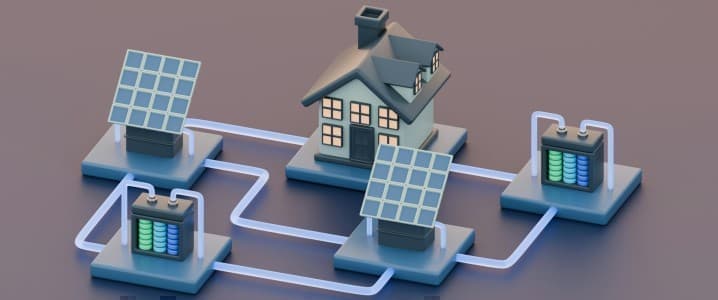
Ford and General Motors (GM) have both announced plans to venture into the world of energy storage, following in the footsteps of the electric vehicle (EV) giant Tesla. The two U.S. automakers have big plans for business expansion, which could drive down EV manufacturing costs, reduce reliance on imports, and expand their portfolios.
The U.S. EV market is growing at a slower pace than anticipated as the Trump administration waters down aims set by the previous government to restrict the sale of internal combustion engine (ICE) vehicles and incentivise the sale of EVs. This has led several companies to reduce their EV production quotas until demand grows. Instead, several companies are exploring the development of energy storage.
While EV demand may be lower than expected, there is a significant need for battery storage. Following the deployment of a huge quantity of renewable energy capacity in recent years, energy companies are increasingly looking to install utility-scale storage systems in projects to make them more reliable. The global battery energy storage system market is expected to achieve a value of $14.5 billion by 2027, rising at a CAGR of 25.2 percent between 2021 and 2027. These energy systems use much of the same technology as EV batteries to produce, making it the perfect sector for automakers to expand into.
Set OilPrice.com as a preferred source in Google here.
Tesla has long been investing in energy storage, having constructed several giga-factories – giant battery manufacturing plants – around the globe. In 2020, Tesla surpassed three gigawatt-hours (GWh) of energy storage deployments, mainly thanks to the popularity of the Megapack. Tesla’s Megapack is a powerful, integrated battery system that provides clean, reliable, cost-effective energy storage to help stabilise the grid and prevent outages, according to the company.
Tesla Energy’s deployed capacity increased by a reported 84 percent year on year in the 12 months from October 2024 to reach 43.5 GWh. The company reported revenues of $3.41 billion from its energy storage and generation segment, compared to $2.32 billion in operational costs. Seeing Tesla’s successful venture into energy storage, several automakers have announced plans to expand into the energy storage business.
In December, Ford announced that it was going to convert its battery production plant in Kentucky into a manufacturing plant for energy storage batteries, as it looks to tap into the growing power demand from data centres, utilities, and grid infrastructure. The giant automaker also plans to use part of its factory space in Marshall, Michigan, to produce cells for residential storage, alongside battery production for its electric truck. Ford has spent around $10 billion on adapting the two plants and is expected to invest another $2 billion in energy business expansion.
Ford announced plans to shift operations to focus on hybrids, trucks and commercial vehicles, as well as energy storage, in a bid to achieve higher returns. This suggests that it is being more cautious when it comes to its EV business, as it took a $19.5 billion write-down in EV-related charges.
Meanwhile, GM, which founded GM Energy several years ago, announced plans in 2025 to partner with Redwood Materials to use EV batteries for energy storage. The automaker reported that sales had increased by fivefold between January and October last year. One of its longstanding products is the “PowerBank”, which it introduced to the market in 2024 and comes in 10.6 kilowatt-hours and 17.7 kWh battery capacity variants. The GM PowerBank allows EV owners a home storage option to store and transfer solar energy. The automaker is also selling charging adapters.
When GM first established its energy business two years ago, the firm’s vice president, Wade Sheffer, said, the tool ‘gives our customers more control over their energy use, helping to mitigate the impact of power outages, integrating renewable energy options and unlocking additional values.”
Expanding into the energy storage business is attractive for several automakers that might otherwise lose out due to the slow pace of EV sales. In several states, the utility companies are required to invest in battery storage, while on the commercial side, companies are investing in energy storage as a power backup for when there are blackouts. This means that there is a large, diverse market for battery storage. Sticking with the battery business also provides automakers with the opportunity to pivot back to EV battery production when needed.
As the EV demand outlook in the U.S. appears less certain than it once seemed to, several automakers are switching up their business model and venturing into other sectors to expand their reach. Both Ford and GM have followed in Tesla’s footsteps by investing heavily in energy storage operations over the last year. This will allow the automakers to continue manufacturing at their U.S. EV plants while appealing to alternative markets, such as utilities and data centre developers.
By Felicity Bradstock for Oilprice.com
More Top Reads From Oilprice.com
- Latin America’s Bold Renewable Energy Bet
- Trump’s Attack on Green Energy Hits Manufacturing Sector Hard
- Recycled Nuclear Fuel Key to Breaking Russia’s Energy Grip
Download The Free Oilprice App Today


Felicity Bradstock
Felicity Bradstock is a freelance writer specialising in Energy and Finance. She has a Master’s in International Development from the University of Birmingham, UK.